Costar Royal Jelly 1610mg 6% 10-HDA

Royal Jelly is a power pack of nutrition, designed by nature to create the queen bee and used by humans to maintain maximum health.

Royal Jelly 365 capsules

Traditionally recognised for its ability to increase vitality, improve digestion and condition the skin, hair and nails

New benefits of taking Royal Jelly

such as improved liver function, relieving stress, lowering cholesterol, and anti-inflammatory.

Increasing endurance, stamina and vitality

Relieving the effects of stress.

Wednesday, November 13, 2013

Queen bee


The term queen bee is typically used to refer to an adult, mated female that lives in a honey bee colony or hive; she is usually the mother of most, if not all, the bees in the hive.[1] The queens are developed from larvae selected by worker bees and specially fed in order to become sexually mature. There is normally only one adult, mated queen in a hive.
The term "queen bee" can be more generally applied to any dominant reproductive female in a colony of a eusocial bee species other than honey bees.
When conditions are favorable for swarming, the queen will start laying eggs in queen cups. A virgin queen will develop from a fertilized egg. The young queen larva develops differently because it is more heavily fed royal jelly, a protein-rich secretion from glands on the heads of young workers. If not for being heavily fed royal jelly, the queen larva would have developed into a regular worker bee. All honey bee larvae are fed some royal jelly for the first few days after hatching but only queen larvae are fed on it exclusively. As a result of the difference in diet, the queen will develop into a sexually mature female, unlike the worker bees.
Queens are raised in specially constructed queen cells. The fully constructed queen cells have a peanut-like shape and texture. Queen cells start out as queen cups. Queen cups are larger than the cells of normal brood comb and are oriented vertically instead of horizontally. Worker bees will only further build up the queen cup once the queen has laid an egg in a queen cup. In general, the old queen starts laying eggs into queen cups when conditions are right for swarming or supersedure. Swarm cells hang from the bottom of a frame while supersedure queens or emergency queens are generally raised in cells built out from the face of a frame.
As the young queen larva pupates with her head down, the workers cap the queen cell with beeswax. When ready to emerge, the virgin queen will chew a circular cut around the cap of her cell. Often the cap swings open when most of the cut is made, so as to appear like a hinged lid.
During swarming season, the old queen will likely leave with the prime swarm before the first virgin queen emerges from a queen cell

Virgin queen bee

Metamorphosis of the queen bee
Egghatches on Day 3
Larva (several moltings)Day 3 to Day 8½
Queen cell capped~ Day 7½
Pupa~ Day 8 until emergence
Emergence~Day 15½ - Day 17
Nuptial Flight(s)~Day 20 - 24
Egg Laying~Day 23 and up
A virgin queen is a queen bee that has not mated with a drone. Virgins are intermediate in size between workers and mated, laying queens, and are much more active than the latter. They are hard to spot while inspecting a frame, because they run across the comb, climbing over worker bees if necessary, and may even take flight if sufficiently disturbed. Virgin queens can often be found clinging to the walls or corners of a hive during inspections.
Virgin queens appear to have little queen pheromone and often do not appear to be recognized as queens by the workers. A virgin queen in her first few hours after emergence can be placed into the entrance of any queenless hive or nuc and acceptance is usually very good, whereas a mated queen is usually recognized as a stranger and runs a high risk of being killed by the older workers.
When a young virgin queen emerges from a queen cell, she will generally seek out virgin queen rivals and attempt to kill them. Virgin queens will quickly find and kill (by stinging) any other emerged virgin queen (or be dispatched themselves), as well as any unemerged queens. Queen cells that are opened on the side indicate that a virgin queen was likely killed by a rival virgin queen. When a colony remains in swarm mode after the prime swarm has left, the workers may prevent virgins from fighting and one or several virgins may go with after-swarms. Other virgins may stay behind with the remnant of the hive. As many as 21 virgin queens have been counted in a single large swarm. When the after-swarm settles into a new home, the virgins will then resume normal behavior and fight to the death until only one remains. If the prime swarm has a virgin queen and the old queen, the old queen will usually be allowed to live. The old queen continues laying. Within a couple of weeks she will die a natural death and the former virgin, now mated, will take her place.
Unlike the worker bees, the queen's stinger is not barbed and is able to sting repeatedly without dying.

Beeswax


Beeswax is a natural wax produced in the bee hive of honey bees of the genus Apis. It is mainly esters of fatty acids and various long chain alcohols.
Small amounts of beeswax have food and flavoring applications, and are edible in the sense of having similar toxicity to undigestable plant waxes. However, the wax monoesters in beeswax are poorly hydrolysed in the guts of humans and mammals, and are therefore of no significant food value

Production

the wax is formed by worker bees, which secrete it from eight wax-producing mirror glands on the inner sides of the sternites (theventral shield or plate of each segment of the body) on abdominal segments 4 to 7. The sizes of these wax glands depend on the age of the worker and after daily flights these glands begin to gradually atrophy. The new wax scales are initially glass-clear and colourless (see illustration), becoming opaque after mastication by the worker bee. The wax of honeycomb is nearly white, but becomes progressively more yellow or brown by incorporation of pollen oils and propolis. The wax scales are about 3 millimetres (0.12 in) across and 0.1 millimetres (0.0039 in) thick, and about 1,100 are required to make a gram of wax.

Honey bees use the beeswax to build honeycomb cells in which their young are raised with honey and pollen cells being capped for storage. For the wax-making bees to secrete wax, the ambient temperature in the hive has to be 33 to 36 °C (91 to 97 °F). To produce their wax, bees must consume about eight times as much honey by mass. Typically, for a honey beekeeper, 6.66 to 8.80 pounds of honey yields 1 pound of wax.It is estimated that bees collectively fly 150,000 miles, roughly six times around the earth, to yield one pound of beeswax (530,000 km/kg).

Processing

When beekeepers extract the honey, they cut off the wax caps from each honeycomb cell with an uncapping knife or machine. Its color varies from nearly white to brownish, but most often a shade of yellow, depending on purity and the type of flowers gathered by the bees. Wax from the brood comb of the honey bee hive tends to be darker than wax from the honeycomb. Impurities accumulate more quickly in the brood comb. Due to the impurities, the wax has to be rendered before further use. The leftovers are calledslumgum.
The wax may further be clarified by heating in water. As with petroleum waxes, it may be softened by dilution with vegetable oil to make it more workable at room temperature.

ROYAL JELLY USES & EFFECTIVENESS


ROYAL JELLY OVERVIEW INFORMATION


Royal jelly is a milky secretion produced by worker honey bees. It typically contains about 60% to 70% water, 12% to 15% proteins, 10% to 16% sugar, 3% to 6% fats, and 2% to 3% vitamins, salts, and amino acids. Its composition varies depending on geography and climate. This product gets its name from the fact that bees use it for the development and nurturing of queen bees. Some people use royal jelly as medicine. Don’t confuse royal jelly with bee pollen or bee venom.

Royal jelly is used for asthma, hay fever, liver disease, pancreatitis, sleep troubles (insomnia), premenstrual syndrome (PMS), stomach ulcers, kidney disease, bonefractures, menopausal symptoms, skin disorders, and high cholesterol. It is also used as a general health tonic, for fighting the effects of aging, and for boosting the immune system.

Some people apply royal jelly directly to the skin as a tonic or to the scalp to encourage hair growth.

How does it work?

There is very little scientific information available about the effects of royal jelly in people. In animals, royal jelly seems to have some activity against tumors and the development of “hardening of the arteries.”
ROYAL JELLY USES & EFFECTIVENESS
  • High cholesterol. Preliminary research suggests that royal jelly might lower cholesterol levels in people with high cholesterol.
  • Menopausal symptoms.Some very preliminary research shows that taking a certain combination product containing royal jelly plus flower pollen (Melbrosia) for 12 weeks might help reduce symptoms of menopause and improve feelings of well-being.
  • Premenstrual syndrome (PMS) . Some research shows that a specific combination product (Femal, Natumin Pharma) seems to decrease certain symptoms of PMS including irritability, weight increases, and edema when given over a period of 2 menstrual cycles. Each tablet of this product contains 6 mg of royal jelly, 36 mg of bee pollen extract, and 120 mg of bee pollen plus pistil extract. It is given as 2 tablets twice daily.
  • Asthma.
  • Hay fever.
  • Liver disease.
  • Pancreatitis.
  • Trouble sleeping (insomnia) .
  • Stomach ulcers.
  • Kidney disease.
  • Bone fractures.
  • Skin disorders.
  • Baldness.
  • Boosting immunity.
  • Other conditions.
More evidence is needed to rate the effectiveness of royal jelly for these uses.
ROYAL JELLY SIDE EFFECTS & SAFETY
Royal jelly is POSSIBLY SAFE for most people when used short-term. It can cause serious allergic reactions including asthma, swelling of the throat, and death. Rarely, it might cause the colon to bleed, accompanied by stomach pain and bloodydiarrhea.

There isn't enough information to know if royal jelly is safe when applied directly to the skin. It has caused inflammation and allergic rash when applied to the scalp.

Special Precautions & Warnings:

Pregnancy and breast-feeding: Not enough is known about the use of royal jelly during pregnancy and breast-feeding. Stay on the safe side and avoid use.

Asthma or allergies: Don’t use royal jelly if you have asthma or allergies. It could cause some serious reactions, even death.

Inflamed skin (dermatitis): Royal jelly might make dermatitis worse.
ROYAL JELLY INTERACTIONS 
  • Warfarin (Coumadin) interacts with ROYAL JELLY
    Royal jelly might increase the effects of warfarin (Coumadin). Taking royal jelly with warfarin (Coumadin) might result in an increased chance of bruising or bleeding.

Fertility Super Food – Royal Jelly


While there are a number of different “superfoods” that have proven to be highly effective at helping with fertility, Royal Jelly is more than likely the reigning King…or Queen of the bunch. This nutrient dense substance is a secretion that comes from glands in young worker bees, and is used to not only create a queen bee for procreation, but is also fed to honey bee larvae to provide them with optimal health and growth.
Royal Jelly is rich in amino acids, lipids, sugars, vitamins, and most importantly, proteins. It contains high levels of vitamins D and E, and also has ample levels of iron and calcium. As all of these are essential to proper health and organ function, it is very easy to see how Royal Jelly can help with in assisting with fertility.

Royal Jelly

Royal Jelly is a substance that is secreted by nurse worker bees glands. The secretion is known as royal jelly and it is the main food source for the first 3 days of the larva. One larva that is to be the Queen Bee is fed only royal jelly its entire life. This exclusive feeding triggers the full development of her ovaries which is needed to lay the millions of eggs she will lay in her lifetime. The Queen matures in 5 days and weighs double that of a worker bee. A worker bee only lives to be 30-45 days old, but the Queen bee lives to be 5 to 6 years old. The queen also lays in one season around 250,000 eggs and in peak season she may lay up to 2000 eggs a day. This may have something to do with the extremely high nutritional content of the Royal Jelly which is this Queen’s exclusive diet.
Royal Jelly is rich in amino acids (29 to be exact), lipids, sugars, some vitamins, fatty acids and most importantly, proteins. It contains ample levels of iron and calcium. Royal Jelly also contains acetylcholine, which is needed to transmit nerve messages from cell to cell. Regular consumption of high-quality Royal Jelly has been shown to help balance hormones. This makes it beneficial to those individuals that suffer from a hormonal imbalance, as it helps to provide support to the endocrine system. It may also help with problems that are related to hormonal imbalance. A study done in Japan and published in 2007 shows that Royal Jelly has the propensity to mimic human estrogen, which may help those that suffer from low estrogen levels. Estrogen is essential for healthy bone formation and healthy gene expression, and is vital for a healthy menstrual cycle. This study also showed potential for increased size of uterine cells in the rats studied. While there may need to be more studies done to show full potential of Royal Jelly consumption on uterine health this is exciting potential for women with weak uterine muscles or thin uterine lining due to long-term hormonal birth control use.
Royal Jelly may be beneficial for the following:
  • To increase libido
  • Support egg and sperm health
  • Diminish and reduce the signs of aging
  • To reduce inflammation caused by illness or injury
  • To naturally boost the body’s immune system

Making Informed Decisions When Choosing Bee Products

Be sure that you are choosing high quality products from a reputable source. This is very important not only to you, but to the health of the bees. As you may well know bees are rapidly declining and much of this is thought to be linked to environmental pollution. Choose to support organic, free-range, biodynamic farming and bee keeping practices when possible. Your choices make a difference!
Take the time to learn more about bees and how the sustain our food chain, without them we might perish. There are some great documentaries out there on Colony Collapse Disorder, the lives of bees and how they are on the brink of total collapse. Please keep in mind their vital role in our daily lives!
Our Natural Fertility Shop carries a premium choice of Royal Jelly which is pure Royal Jelly freeze dried to maintain quality. We also carry Alive Bee Power which contains a wonderful blend of these 3 bee products as well as some immune boosting herbs. This company has been certified organic since 1995.

Important Caution

It is extremely important to note that if you are allergic to bees or honey you should avoid all bee products. Side affects and reactions can include minor to severe skin irritations, difficulty breathing or even anaphylactic shock. If you begin to develop a reaction to any of these products discontinue use immediately. Do not feed to infants under 1 year of age. Do not use bee products during pregnancy if either side of your family or the father’s family has a history of bee allergy as this may affect the baby.

Monday, October 28, 2013

What is royal jelly?


Royal jelly is a honey bee secretion that is used in the nutrition of larvae, as well as adult queens. It is secreted from the glands in the hypopharynx of worker bees, and fed to all larvae in the colony, regardless of sex or caste.
When worker bees decide to make a new queen, because the old one is either weakening or dead, they choose several small larvae and feed them with copious amounts of royal jelly in specially constructed queen cells. This type of feeding triggers the development of queen morphology, including the fully developed ovaries needed to lay eggs.

Cultivation

Royal jelly ( sua ong chua) is secreted from the glands in the heads of worker bees, and is fed to all bee larvae, whether they are destined to become drones (males), workers (sterile females), or queens (fertile females). After three days, the drone and worker larvae are no longer fed with royal jelly, but queen larvae continue to be fed this special substance throughout their development. It is harvested by humans by stimulating colonies with movable frame hives to produce queen bees. Royal jelly is collected from each individual queen cell (honeycomb) when the queen larvae are about four days old. It is collected from queen cells because these are the only cells in which large amounts are deposited; when royal jelly is fed to worker larvae, it is fed directly to them, and they consume it as it is produced, while the cells of queen larvae are "stocked" with royal jelly much faster than the larvae can consume it. Therefore, only in queen cells is the harvest of royal jelly practical. A well-managed hive during a season of 5–6 months can produce approximately 500 g of royal jelly. Since the product is perishable, producers must have immediate access to proper cold storage (e.g., a household refrigerator or freezer) in which the royal jelly is stored until it is sold or conveyed to a collection center. Sometimes honey or beeswax are added to the royal jelly, which is thought to aid its preservation.

Composition

The overall composition of royal jelly is 67% water, 12.5% crude protein, including small amounts of many different amino acids, and 11% simple sugars (monosaccharides), also including a relatively high amount (5%) of fatty acids. It also contains many trace minerals, some enzymes, antibacterial and antibiotic components, pantothenic acid (vitamin B5),vitamin B6 (pyridoxine) and trace amounts of vitamin C,but none of the fat-soluble vitamins, A, D, E and K.

Uses

Royal jelly is collected and sold as a dietary supplement for humans, claiming various health benefits because of components such as B-complex vitamins.

It is also used as a component in some skin care and natural beauty products. In holistic healing circles and popular alternative medicine folklore, royal jelly is believed to have anti-aging properties. Some alternative medicine practitioners attribute this to its amino acid content and broad spectrum of vitamins and minerals.

Honey bee


Honey bees (or honeybees) are a subset of bees in the genus Apis, primarily distinguished by the production and storage of honey and the construction of perennialcolonial nests out of wax. Honey bees are the only extant members of the tribe Apini, all in the genus Apis. Currently, there are only seven recognised species of honey bee with a total of 44 subspecies, though historically, anywhere from six to eleven species have been recognised. Honey bees represent only a small fraction of the approximately 20,000 known species of bees. Some other types of related bees produce and store honey, but only members of the genus Apis are true honey bees.

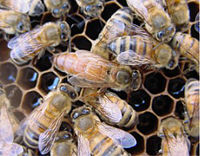
honeycomb is a mass of hexagonal wax cells built by honey bees in their nests to contain their larvae and stores of honey and pollen
Beeswax is a natural wax produced in the bee hive of honey bees of the genus Apis. It is mainly esters of fatty acids and various long chain alcohols.
Small amounts of beeswax have food and flavoring applications, and are edible in the sense of having similar toxicity to undigestable plant waxes. However, the wax monoesters in beeswax are poorly hydrolysed in the guts of humans and mammals, and are therefore of no significant food value.

Royal jelly overview

What is Royal Jelly?
Sua ong chua Royal jelly is a milky secretion produced by worker honey bees. It typically contains about 60% to 70% water, 12% to 15% proteins, 10% to 16% sugar, 3% to 6% fats, and 2% to 3% vitamins, salts, and amino acids. Its composition varies depending on geography and climate. This product gets its name from the fact that bees use it for the development and nurturing of queen bees. Some people use royal jelly as medicine. Don’t confuse royal jelly with bee pollen or bee venom. Royal jelly is used for asthma, hay fever, liver disease, pancreatitis, sleep troubles (insomnia), premenstrual syndrome (PMS), stomach ulcers, kidney disease, bone fractures, menopausal symptoms, skin disorders, and high cholesterol. It is also used as a general health tonic, for fighting the effects of aging, and for boosting the immune system. Some people apply royal jelly directly to the skin as a tonic or to the scalp to encourage hair growth. How does it work? There is very little scientific information available about the effects of royal jelly in people. In animals, royal jelly seems to have some activity against tumors and the development of “hardening of the arteries.”
Royal Jelly Uses


  • High cholesterol. Preliminary research suggests that royal jelly might lower cholesterol levels in people with high cholesterol.
  • Menopausal symptoms.Some very preliminary research shows that taking a certain combination product containing royal jelly plus flower pollen (Melbrosia) for 12 weeks might help reduce symptoms of menopause and improve feelings of well-being.
  • Premenstrual syndrome (PMS) . Some research shows that a specific combination product (Femal, Natumin Pharma) seems to decrease certain symptoms of PMS including irritability, weight increases, and edema when given over a period of 2 menstrual cycles. Each tablet of this product contains 6 mg of royal jelly, 36 mg of bee pollen extract, and 120 mg of bee pollen plus pistil extract. It is given as 2 tablets twice daily.
  • Asthma.
  • Hay fever.
  • Liver disease.
  • Pancreatitis.
  • Trouble sleeping (insomnia) .
  • Stomach ulcers.
  • Kidney disease.
  • Bone fractures.
  • Skin disorders.
  • Baldness.
  • Boosting immunity.
  • Other conditions.
Royal Jelly side effects and safety
Royal jelly is POSSIBLY SAFE for most people when used short-term. It can cause serious allergic reactions including asthma, swelling of the throat, and death. Rarely, it might cause the colon to bleed, accompanied by stomach pain and bloodydiarrhea.

There isn't enough information to know if royal jelly is safe when applied directly to the skin. It has caused inflammation and allergic rash when applied to the scalp.

Special Precautions & Warnings:


Pregnancy and breast-feeding: Not enough is known about the use of royal jelly during pregnancy and breast-feeding. Stay on the safe side and avoid use.

Asthma or allergies: Don’t use royal jelly if you have asthma or allergies. It could cause some serious reactions, even death.

Inflamed skin (dermatitis): Royal jelly might make dermatitis worse.